Ask a warehouse manager why they can't keep people and you'll hear that nobody wants to work, or that they left for fifty cents more. Neither explains the pattern we actually see: most departures happen in the first two weeks, and almost none of them are about pay.
Most warehouse turnover happens in the first two weeks and is rarely about pay alone. Common causes include a job description that doesn't match the floor, a difficult commute, a poor first morning and the physical shock of the work — most of which can be addressed before and during the first shifts.
Ask a warehouse manager why they can't keep people and you will almost always hear a version of "nobody wants to work" or "they leave for fifty cents more down the road." Both are occasionally true. Neither explains the pattern we actually see, which is much more specific and much more fixable.
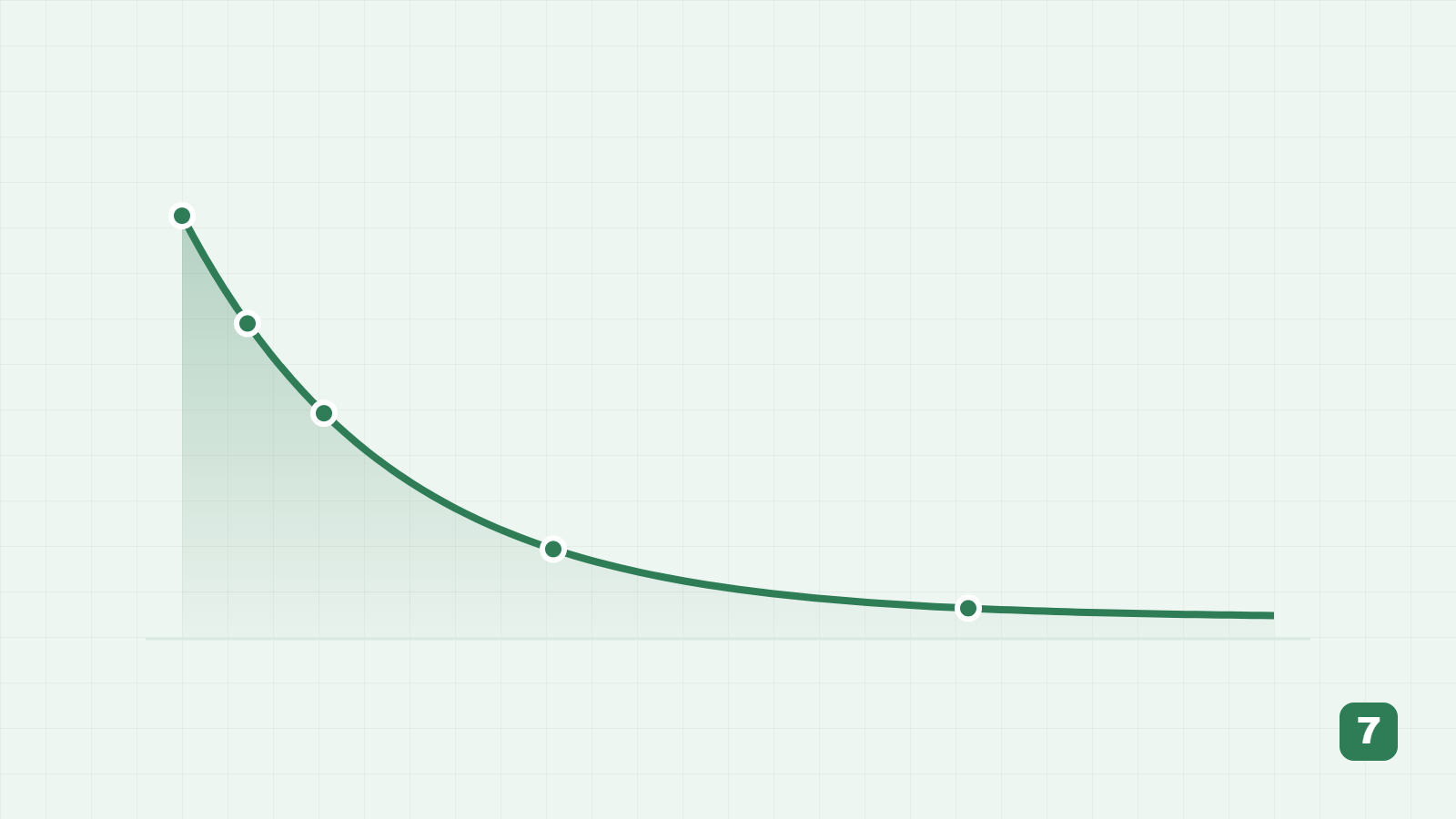
The pattern is this: most warehouse departures happen in the first two weeks, and almost none of them are really about pay.
Warehouse and light industrial turnover is not spread evenly across a worker's tenure. It clusters hard at the front:
That distribution matters because it tells you where to spend. Raising the rate does very little for the day-one cluster — the person who walked off at 10 a.m. did not do a wage comparison. Most retention budgets are aimed at the smallest cluster.
In rough order of how often we see them:
"Some lifting" turns out to be the entire shift. "Warehouse work" turns out to be a freezer. The posting said picking; the reality is unloading containers by hand. This is the single biggest cause and it is entirely self-inflicted — a vague job description filters nobody out, so it fills your first day with people who were never going to stay.
A site fifteen minutes away by car is a ninety-minute two-transfer transit trip that doesn't run before 5:30 a.m. or after 11 p.m. The worker does it twice on goodwill and then stops. This is the most predictable cause on the list and almost nobody checks it before the offer.
They arrive at 6 a.m., the supervisor who hired them is in at 8, nobody at the door knows who they are, and they stand around for forty minutes. Some leave before anyone talks to them — and get recorded as a no-show. That first hour sets whether the person believes this is a serious place to work.
Eight hours on concrete, in a cold room, at pace, is genuinely hard, and people who have never done it don't know what it costs until day two, when everything hurts. Preparing someone for this honestly — and easing the ramp in the first three days — retains people that surprise loses.
They understood one number, the first pay shows another. The premium they thought applied doesn't. They were told "40 hours" and got 26. Trust does not recover from this, and it should not.
Three different people telling them three different methods in the first week, or one supervisor whose approach is corrective only. People do not leave warehouses; they leave the specific person standing over them. Where one team's turnover is triple another's on the same site, the difference is not the work.
The month-three cluster. Nobody ever mentioned certification, lead hand, a different department, or a permanent conversion. A competent worker who can see no path takes the next fifty cents, because there's no reason not to.
If you fix one thing, fix this. It costs nothing and it moves the biggest cluster.
Almost every first-week departure we investigate was visible on day one and nobody asked a question.
Take the site postal code, take the shift start time, and check the real transit journey at that hour — not the midday route. Then ask whether you would personally do that trip twice a day for the rate you're offering.
This is not a small factor in our markets. A distribution site in the East End of Montréal, in Burnside in Dartmouth, or in an industrial park outside Moncton can be effectively unreachable at 5:30 a.m. by transit, which quietly restricts your entire candidate pool to people with cars — while your rate assumes people without them.
What actually helps, in order of cost: recruit deliberately from the transit lines and neighbourhoods that do reach you; align shift start with the first realistic bus rather than five minutes before it; where several people share a route, coordinate a carpool; and if you're on a genuinely unreachable site with an early start, accept that a transport allowance is cheaper than replacing the position four times a year.
Some patterns lose people regardless of pay:
You cannot manage this on impressions. Track three things, by position and by supervisor:
We will happily fill a position four times a year. We would rather tell you why you're filling it four times.
An agency genuinely helps with the sourcing side: a screened pool, honest briefing of workers on the real physical demand before they arrive, and a day-two call that surfaces problems while they're still small. Where we place repeatedly on the same site, the retention difference usually comes from that call, not from better candidates.
What no agency can fix: a shift pattern that makes childcare impossible, a site nobody can reach at 5:30 a.m., a supervisor whose team always empties, or a job description that misrepresents the work. Those are yours. If turnover is your real problem, the sourcing spend is a tax on not fixing them — and the arithmetic of that tax is in the cost of a bad hire.
Related: how temporary staffing actually works — particularly the section on what a strong brief contains, since half the causes above are briefing failures. If your volume is seasonal, the seasonal hiring calendar covers planning the peaks so you're not hiring in a panic.
Need a steadier warehouse crew? See warehouse staffing in Montreal, warehouse & light industrial staffing across QC, NS and NB, or Dartmouth & Halifax — or request staff.
Because the causes are front-loaded and mostly informational. The job wasn't described accurately, nobody was expecting the person on their first morning, the commute turned out to be impractical at that shift time, or the physical demand was a shock. Very little of the first-week cluster is a wage decision, which is why raising the rate rarely moves it.
Write an honest job description with real lift weights, real temperatures and the real shift, and have a named person present and expecting the new worker on their first morning. Both are free, and together they address the largest cluster of departures.
It helps at the margin and it is the only lever that costs you every hour of every week. But it does almost nothing for the day-one and week-two clusters, which are about description, commute, first-morning experience and schedule. Spend the free fixes first, then pay competitively for the people who stayed.
Heavily, and it's the most predictable cause on the list. A site fifteen minutes away by car can be a ninety-minute two-transfer transit trip that doesn't run before 5:30 a.m. People do it twice on goodwill and then stop. Check the real transit route at the real shift start time before you make an offer.
Three, broken down by position and by supervisor: first-week survival (what share of starters worked a second week), 90-day survival (the headline number — under 60% means the problem is structural), and turnover by supervisor. The third is the most uncomfortable and by far the most informative.
Partly. An agency can screen better, brief workers honestly on the real physical demand before they arrive, and make a day-two call that surfaces problems early. It cannot fix a shift pattern that makes childcare impossible, a site nobody can reach at 5:30 a.m., a supervisor whose team always empties, or a misleading job description. Those stay with you.
We'd rather help you work out why than bill you again. Tell us the position and the pattern and we'll give you an honest read.